EVALUATION OF METHODS FOR DETERMINATION OF ANTIOXIDANT POTENTIAL OF WATER-ETHANOL EXTRACTS OF R. ACICULARIS
UDC 581.1

Abstract
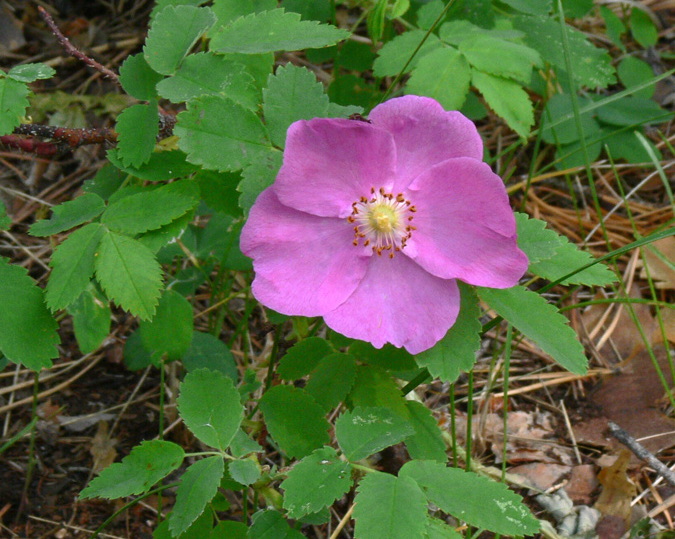
Oxidative stress, which underlies the pathogenesis of more than 200 diseases, actualizes the search for natural antioxidants. Prickly rose (Rosa acicularis Lindl.), which grows in extreme conditions, is of interest due to its high content of biologically active substances. However, its antioxidant potential has not been studied sufficiently compared to other species of the genus Rosa. In this work, a comprehensive evaluation of the antioxidant activity of water-ethanol extracts of leaves, fruit pulp, and seeds of R. acicularis collected in Yakutia was carried out using the following methods: Fe2+-induced peroxidation of yolk lipoproteins, DPPH assay, and chemiluminescence. The phytochemical profile of extracts from different plant organs was found to vary significantly: leaves are rich in phenols (140.99 mg/g) and flavonoids (2.51 mg/g), fruit pulp in ascorbic (40.71 mg/g) and gallic acids (4.35 mg/g), and seeds in phenylpropanoids (1.51 mg/g). The antioxidant activity of the extracts showed dependence on the method of analysis: leaf extracts were effective in radical-binding tests (DPPH), fruit pulp extracts were effective in metal chelation (Fe2+-model), and seeds were inactive. The results emphasize the need to combine methods for an objective evaluation that considers the mechanisms of action of antioxidants and the specificity of the plants. The study confirms the promise of R. acicularis as a source of natural antioxidants for medicine and nutraceuticals and the importance of standardizing approaches for analyzing bioactive extracts.
Downloads
References
Steven S., Frenis K., Oelze M., Kalinovic S., Kuntic M., Bayo Jimenez M.T., Vujacic-Mirski K., Helmstädter J., Kröller-Schön S., Münzel T., Daiber A. Oxid. Med. Cell. Longev., 2019, article 7092151. https://doi.org/10.1155/2019/7092151.
Hajam Y.A., Rani R., Ganie S.Y., Sheikh T.A., Javaid D., Qadri S.S., Pramodh S., Alsulimani A., Alkhanani M.F., Harakeh S., Hussain A., Haque S., Reshi M.S. Cells., 2022, vol. 11(3), 552. https://doi.org/10.3390/cells11030552.
Huang Z., Zhou L., Duan J., Qin S., Jiang J., Chen H., Wang K., Liu R., Yuan M., Tang X., Nice E.C., Wei Y., Zhang W., Huang C. Adv. Sci., 2024, vol. 11(13), e2306929. https://doi.org/10.1002/advs.202306929.
Razgonova M.P., Nawaz M.A., Rusakova E.A., Golokhvast K.S. Plants, 2024, vol. 14(1), 59. https://doi.org/10.3390/plants14010059.
Igual M., García-Herrera P., Cámara R.M., Martínez-Monzó J., García-Segovia P., Cámara M. Molecules, 2022, vol. 27(15), 4737. https://doi.org/10.3390/molecules27154737.
Belkhelladi M., Bougrine A. J. Cosmet. Dermatol., 2024, vol. 23(1), pp. 62–67. https://doi.org/10.1111/jocd.15971.
Wang S., Zhu F. Crit. Rev. Food Sci. Nutr., 2017, vol. 57(11), pp. 2343–2357. https://doi.org/10.1080/10408398.2015.
Singleton V.L., Orthofer R., Lamuela-Raventós R.M. Methods Enzymol., 1999, vol. 299, pp. 152–178. https://doi.org/10.1016/S0076-6879(99)99017-1.
Gosudarstvennaya farmakopeya Rossiyskoy Federatsii. XIII izd. [State Pharmacopoeia of the Russian Federation. XIII ed.]. Moscow, 2015, vol. 1, 1470 p. (in Russ.).
Kurdyukov Ye.Ye., Vodop'yanova O.A., Mitishev A.V. Khimiya rastitel'nogo syr'ya, 2020, no. 3, pp. 115–121. (in Russ.).
Vladimirov G.K., Sergunova Ye.V., Izmaylov D.Yu., Vladimirov Yu.A. Vestnik RGMU, 2016, no. 2, p. 65. https://doi.org/10.24075/brsmu.2016-02-10. (in Russ.).
Klebanov G.I., Babenkova I.V., Teselkin Yu.O., Komarov O.S., Vladimirov Yu.A. Laboratornoye delo, 1988, no. 5, p. 59. (in Russ.).
Blois M.S. Nature, 1958, vol. 181(4617), 1199. https://doi.org/10.1038/1811199a0.
Olennikov D.N., Chemposov V.V., Chirikova N.K. Plants, 2021, vol. 10(11), 2525. https://doi.org/10.3390/plants10112525.
Mishra N., Jiang C., Chen L., Paul A., Chatterjee A., Shen G. Front. Plant Sci., 2023, vol. 14, 1110622. https://doi.org/10.3389/fpls.2023.1110622.
Yeo J., Shahidi F. J. Agric. Food Chem., 2019, vol. 67(26), 7526. https://doi.org/10.1021/acs.jafc.9b02462.
Badmus J.A., Adedosu T.O., Fatoki J.O., Adegbite V.A., Adaramoye O.A., Odunola O.A. Acta Pol. Pharm., 2011, vol. 68(1), pp. 23–29.
Litwinienko G., Ingold K.U. J. Org. Chem., 2005, vol. 70(22), 8982. https://doi.org/10.1021/jo051474p.
Munteanu I.G., Apetrei C. Int. J. Mol. Sci., 2021, vol. 22(7), 3380. https://doi.org/10.3390/ijms22073380.
Izmaylov D.Yu., Demin Ye.M., Vladimirov Yu.A. Fotobiologiya i fotomeditsina, 2011, vol. 7, p. 70. (in Russ.).
Thorpe G.H., Kricka L.J. Methods Enzymol., 1986, vol. 133, pp. 331–353. https://doi.org/10.1016/0076-6879(86)33078-7.
Copyright (c) 2026 Chemistry of plant raw material

This work is licensed under a Creative Commons Attribution 4.0 International License.

This work is licensed under a Creative Commons Attribution 4.0 International License.
The authors, which are published in this journal, agree to the following conditions:
1. Authors retain the copyright to the work and transfer to the journal the right of the first publication along with the work, at the same time licensing it under the terms of the Creative Commons Attribution License, which allows others to distribute this work with the obligatory indication of the authorship of this work and a link to the original publication in this journal .
2. The authors retain the right to enter into separate, additional contractual agreements for the non-exclusive distribution of the version of the work published by this journal (for example, to place it in the university depository or to publish it in a book), with reference to the original publication in this journal.
3. Authors are allowed to post their work on the Internet (for example, in a university repository or on their personal website) before and during the review process of this journal, as this may lead to a productive discussion, as well as more links to this published work.