GENUS NETTLE (URTICA L.): A POORLY STUDIED GENUS WITH GREAT POTENTIAL (REVIEW)
UDC 582.635.5: 581.192

Abstract
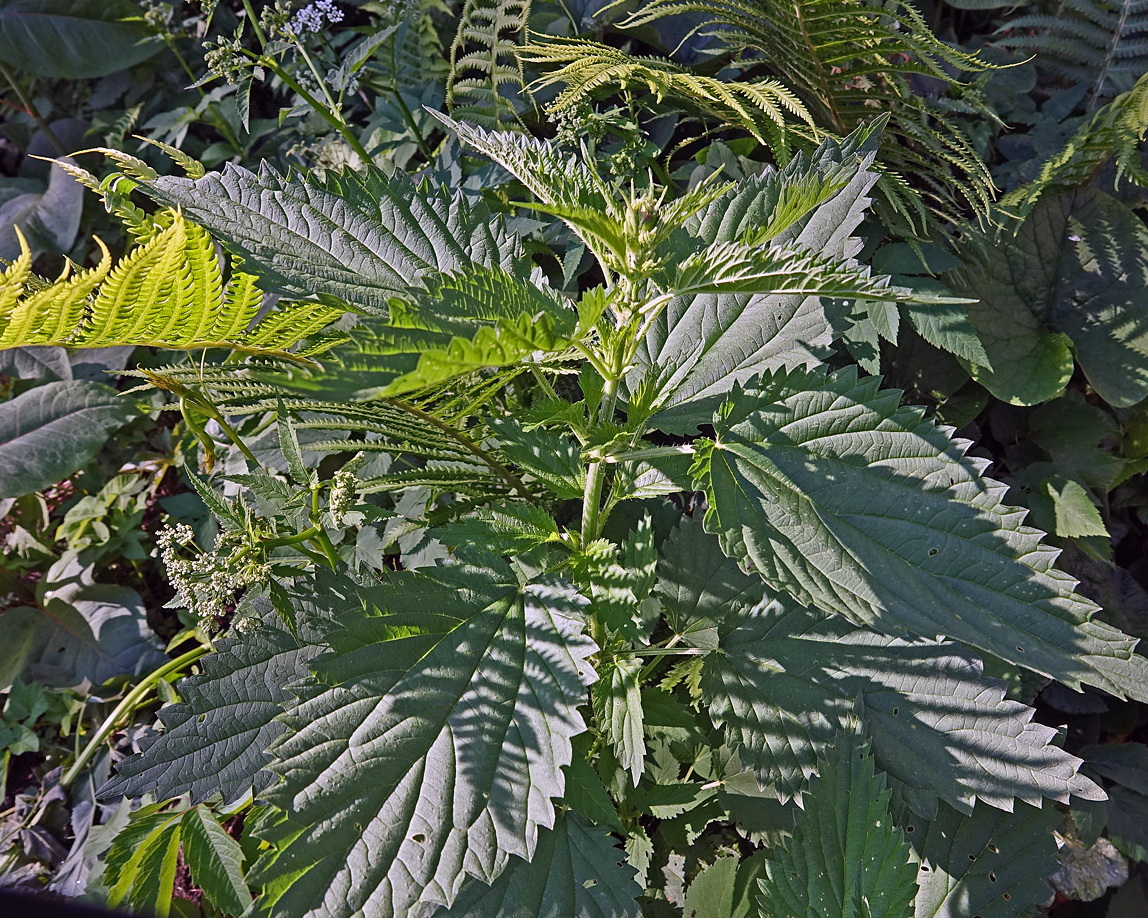
The review provides information on the distribution, composition of metabolites, biological activity of the genus Urtica L., including 50–53 species of plants, shrubs, trees and lianes.
In official medicine, the genus Urtica L. is represented by two species – great nettle in Russia and some CIS countries, burning nettle in the EU countries, Great Britain and the USA.
In traditional medicine of different countries, only 25 types of genus Urtica L. are used, the practice of using which shows that nettle is most often used for diseases of the musculoskeletal system, kidneys and urinary tract, skin diseases of bacterial and fungal nature.
The most experimentally studied are the antioxidant and anti-inflammatory properties, the composition of individual metabolites of 13 species of the genus. About 200 substances belonging to different classes of substances have been identified in the species studied.
Extracts and individual substances in an in vivo, in vitro, in silico experiment have a wide spectrum of pharmacological activity. Promising types of activity should be considered the ability to prevent premature aging of the skin, improve cognitive functions of the brain, and inhibit SARS-CoV-2.
There are data from successful clinical trials and observations of patients taking U. urens and U. dioica. The pronounced anti-inflammatory properties of some of the studied species confirm the validity of their use in traditional medicine in musculoskeletal diseases, as shown in several clinical studies.
This information shows that plants of the genus Urtica and their individual metabolites are promising for further experimental and clinical study in order to expand the raw materials base, areas of application in medicine, and create effective drugs.
Downloads
References
Zhizn' rasteniy: v 6 t. T. 5-2: Tsvetkovyye. [Life of plants: in 6 volumes. Vol. 5-2: Flowering]. Moscow, 1981, 576 p. (in Russ.).
International plant names index. URL: https://ipni.org.
Taheri Y., Quispe C., Herrera-Bravo J., Sharifi-Rad J., Ezzat S.M. et al. Evid Based Complement Alternat Med., 2022, 4024331. https://doi.org/10.1155/2022/4024331.
Flora Sibiri v 14 tomakh. T. 5. Salicaceae – Amaranthaceae. [Flora of Siberia in 14 volumes. Vol. 5. Salicaceae – Am-aranthaceae]. Novosibirsk, 1991, 314 p. (in Russ.).
Rastitel'nyye resursy Rossii: Dikorastushchiye tsvetkovyye rasteniya, ikh komponentnyy sostav i biologicheskaya ak-tivnost'. Dopolneniya k 1 tomu. [Plant resources of Russia: Wild flowering plants, their component composition and bi-ological activity. Supplements to volume 1]. St. Petersburg; Moscow, 2018, 409 p. (in Russ.).
Gosudarstvennaya Farmakopeya Rossiyskoy Federatsii XIV izdaniye. [State Pharmacopoeia of the Russian Federation XIV edition]. Moscow, 2018, vol. 4. URL: https://pharmacopoeia.regmed.ru/pharmacopoeia/izdanie-14/2/2-5/krapivy-dvudomnoy-listya-urticae-dioicae-folia/. (in Russ.).
Gosudarstvennaya farmakopeya Respubliki Belarus'. [State Pharmacopoeia of the Republic of Belarus]. Minsk, 2007, vol. 2, pp. 354–256. (in Russ.).
British Pharmacopoeia 2018. London: The Stationary Office, 2018, vol. 4, 576 р.
European Pharmacopoiea. 11.5, 2024.
American Herbal Pharmacopoeia, 2009.
Zhang X., Lu X., Feng B., Xi Y., Gao C., Feng W. Biochemical Systematics and Ecology, 2023, vol. 106. https://doi.org/10.1016/j.bse.2022.104561.
Rastitel'nyye resursy Rossii: Dikorastushchiye tsvetkovyye rasteniya, ikh komponentnyy sostav i biologicheskaya ak-tivnost'. T. 1. Magnoliaceae – Juglandaceae, Ulmaceae, Moraceae, Cannabaceae, Urticaceae. [Plant resources of Russia: Wild flowering plants, their component composition and biological activity. Vol. 1. Magnoliaceae – Juglan-daceae, Ulmaceae, Moraceae, Cannabaceae, Urticaceae]. St. Petersburg; Moscow, 2008, 421 p. (in Russ.).
Yuan Z., Wang W. Journal of Natural Medicines, 2008, vol. 63(1), pp. 100–101. https://doi.org/10.1007/s11418-008-0274-8.
Wang W., Guo Yan X., Xin Duan L., Zhou Yu., Tang L., Wang Y.Q., Feng B.M. Chinese Chemical Letters, 2008, vol. 19, no.10, pp. 1212–1214. https://doi.org/10.1016/j.cclet.2008.06.049.
Hwang E., Ngo H.T.T., Seo S.A, Park B., Zhang M., Gao W., Yi T.H. Journal of Functional Foods, 2017, vol. 36, pр. 162–177. https://doi.org/10.1016/j.jff.2017.07.004.
La M., Wang Q., Wang Y., Mian R., Zhao T., He F., Chen C., Zou D. Natural Product Research, 2023. https://doi.org/10.1080/14786419.2023.2297861.
Fu H.Y., Chen S.J., Chen R.F., Ding W.H., Kuo-Huang L.L., Huang R.N. Annals of Botany, 2006, vol. 98(1), pp. 57–65. https://doi.org/10.1093/aob/mcl089.
Carvalho А.R., Costa G., Figueirinha A., Liberal J., Prior J.A.V., Lopes M.C.e, Cruz M.T., Batista M.T. Food Re-search International, 2017, vol. 99, pр.485–494. https://doi.org/10.1016/j.foodres.2017.06.008.
Maniriho O., Nkurunziza J.P., Ayodele A.E. et al. J. Pharm. Pharmacol., 2021, vol. 3(2), pp. 56–63. https://doi.org/10.36349/easjpp.2021.v03i02.004.
Soumaya G., Hédia H., Mouhiba Ben N.-A. South African Journal of Botany, 2021, vol. 142, pр. 124–130. https://doi.org/10.1016/j.sajb.2021.06.017.
Zamani Z., Razavi S.M.A. Food Hydrocolloids, 2021, vol. 112, 106304. https://doi.org/10.1016/j.foodhyd.2020.106304.
Rajput P., Chaudhary Sharma R.A. Inetrn. J. of Pharmacy. Scien. and Res., 2017, vol. 6, pp. 1387–1396. https://doi.org/10.13040/IJPSR.0975-8232.9(4).1387-96.
Yang W.-J., Ma Y.-M., Gong P. et al. Journal of Ethnopharmacology, 2022, vol. 289, 115060. https://doi.org/10.1016/j.jep.2022.115060.
Zhang Q., Li L., Liu L., Li Y., Yuan L., Song L., Wu Z. Phytomedicine, 2008, vol. 15(9), pp. 722–727. https://doi.org/10.1016/j.phymed.2007.12.005.
Lu X., Li X.-Q., Qin H.-H. et al. Journal of Asian Natural Products Research, 2019, vol. 21, no. 2, pp. 165–170. https://doi.org/10.1080/10286020.2017.1411347.
Wang M., Wu L., Zhang H. et al. Chem. Nat. Compd., 2019, vol. 55, pp. 839–842. https://doi.org/10.1007/s10600-019-02827-z.
Wang M.Y., Yang Y., Zhou X.Y. et al. J. Asian Nat. Prod. Res., 2018, vol. 20(8), pp. 709–718. https://doi.org/10.1080/10286020.2017.1383397.
Zhang Y., Liu J., Guo Z., Li X., Wang M. Nat. Prod. Res., 2021, vol. 35(18), pp. 3011–3017. https://doi.org/10.1080/14786419.2019.1684279.
Zhang H., Zhang Y., Wang M.Y., Chen S., Li X.B. J. Asian Nat. Prod. Res., 2019, vol. 21(11), pp. 1068–1074. https://doi.org/10.1080/10286020.2018.1563074.
Yan X.-G., Jia J.-M., Tang L. et al. New Chemical Constituents of Roots of Urtica triangularis HAND-MASS // Chemical and Pharmaceutical Bulletin. 2008, vol. 56, no. 10, pp. 1463–1465. https://doi.org/10.1248/cpb.56.1463.
Fu Q., Xiao D., Jiang N., Luosang D. et al. Nat. Prod. Res., 2023, vol. 20, pp. 1–6. https://doi.org/10.1080/14786419.2023.2295914.
Feng B., Yan X.., Wang H., Shi L. et al. Fitoterapia, 2010, vol. 81(6), pp. 607–609. https://doi.org/10.1016/j.fitote.2010.03.002.
Petsukha V.S., Chebykin Ye.P., Fedosseva G.M. Sibirskiy meditsinskiy zhurnal, 2008, no. 6, pp. 88–90. (in Russ.).
Khanina M.A., Gubin K.V., Rodin A.P., Khanina M.G. Sovremennyye problemy nauki i obrazovaniya, 2016, no. 6. URL: https://science-education.ru/ru/article/view?id=25717. (in Russ.).
Gubin K.V., Khanina M.A. Journal of Siberian Medical Sciences, 2011, no. 5. URL: https://cyberleninka.ru/article/n/analiz-aminokislotnogo-i-elementnogo-sostava-nadzemnoy-chasti-i-suhogo-ekstrakta-urtica-cannabina. (in Russ.).
Aishan H., Baba M., Iwasaki N., Kuang H., Okuyama T. Pharm. Biol., 2010, vol. 48(5), pp. 577–583. https://doi.org/10.3109/13880200903214215.
Petsukha V.S. Farmakognosticheskoye issledovaniye krapivy konoplevoy (Urtica cannabina): avtoref. diss. … kand. farm. nauk. [Pharmacognostic study of hemp nettle (Urtica cannabina): author's abstract. diss. … candidate of pharma-ceutical sciences]. Ulan-Ude, 2009, 22 p. (in Russ.).
Olennikov D.N., Kashchenko N.I., Chirikova N.K. Khimiya rastitel'nogo syr'ya, 2022, no. 3, pp. 167–175. https://doi.org/10.14258/jcpim.20220311231. (in Russ.).
Kir'yakova V.O. Farmakognosticheskoye izucheniye nekotorykh vidov roda Urtica, proizrastayushchikh na territorii Altayskogo kraya: avtoref. diss. … kand. farm. nauk. [Pharmacognostic study of some species of the genus Urtica growing in the Altai Territory: author's abstract. diss. … candidate of pharmaceutical sciences]. Perm', 2013, 22 p. (in Russ.).
Isaykina N.V., Kolomiyets N.E., Abramets N.Yu., Mar'in A.A. Khimiya rastitel'nogo syr'ya, 2022, no. 3, pp. 127–138. https://doi.org/10.14258/jcprm.20220310873. (in Russ.).
Kolomiyets N.E., Kalinkina G.I., Sapronova N.N. Farmatsiya, 2011, no. 6, pp. 22–24. (in Russ.).
Esquivel-García R., Seker A., Abu-Lail N.I., García-Pérez M. et al. Journal of Herbal Medicine, 2022, vol. 36, 100599. https://doi.org/10.1016/j.hermed.2022.100599.
Bussmann R.W., Malca G., Glenn A., Sharon D. et al. J. Ethnopharmacol., 2011, vol. 137(1), pp. 121–140. https://doi.org/10.1016/j.jep.2011.04.071.
Chauhan S., Thayes C., Ali B., Rawal Y.K. Aquaculture Reports, 2024, vol. 36. https://doi.org/10.1016/j.aqrep.2024.102142.
Ngo H.T.T., Fang M., Hwang E., Kim Y., Park B. Antioxidants, 2020, vol. 9(3), p. 197. https://doi.org/10.3390/antiox9030197.
Wabai Y.W., Mwonjoria J.K.M., Njagi E.N.M. J. Phytopharmacol., 2018, vol. 7(6), pp. 460–463.
Liao F., Bao T., Tao G., Hu Y., Han C. Vet. Med.-Czech., 2023, vol. 68, pp. 200–207. https://doi.org/10.17221/6/2023-VETMED.
Barman N.R., Kar P.K., Hazam P.K., Pal H.S., Kumar A., Bhattacharya S., Haldar P.K. Chinese Journal of Natural Medicines, 2013, vol. 11, no. 1, pр. 38–42. https://doi.org/10.1016/S1875-5364(13)60005-9.
Kavalalı G., Tuncel H., Göksel S., Hatemi H.H. Journal of Ethnopharmacology, 2003, vol. 84, no. 2–3, pр. 241–245. https://doi.org/10.1016/S0378-8741(02)00315-X.
Abo-elmatty D.M., Essawy S.S., Badr J.M., Sterner O. J. Ethnopharmacol., 2013, vol. 145(1), pp. 269–277. https://doi.org/10.1016/j.jep.2012.11.002.
Velasco L.R., Tapia A.R., Ruíz C.J., Sánchez Siles T.E., Herrerasolis S.B., Cerón R., Santana C.J. Int. J. Pharm. Sci. & Res., 2021, vol. 12(2), pр. 1293–1299. https://doi.org/10.13040/IJPSR.0975-8232.12(2).1293-99.
Aishan H. Pharmaceutical Biology, 2010, pp. 48577–48583.
Wujiamaiti Z., Kizaibek M., Bahetijian D., Li Y., Gui Y., Abula A. Journal of Ethnopharmacology, 2024, vol. 318A. https://doi.org/10.1016/j.jep.2023.116907.
Gubin K.V., Sen'kova A.V., Khanina M.A., Ageyeva T.A. Byulleten' Sibirskoy meditsiny, 2011, no. 5, vol. 10, pp. 45–49. (in Russ.).
Mzid M., Ghlissi Z., Ben Salem M., Khedir S.B. et al. Biomedicine & Pharmacotherapy, 2018, vol. 97, pр. 518–527. https://doi.org/10.1016/j.biopha.2017.10.150.
Mzid M., Badraoui R., Khedir S.B., Sahnoun Z., Rebai T. Biomedicine & Pharmacotherapy, 2017, vol. 91, pр. 1022–1041. https://doi.org/10.1016/j.biopha.2017.05.023.
Caliskaner Z., Karaayvaz M., Ozturk S. Complement Ther. Med., 2004, vol. 12(1), pp. 57–58. https://doi.org/10.1016/j.ctim.2003.12.001.
Balagozyan E.A. Farmakognosticheskoye issledovaniye kornevishch s kornyami krapivy dvudomnoy (Urtica dioica L.): diss. … kand. farm. nauk. [Pharmacognostic study of rhizomes with roots of stinging nettle (Urtica dioica L.): diss. … Cand. of Pharmacological Sciences]. Samara, 2017, 161 p. (in Russ.).
Ali A.K., Mahsa S., Mohammad R.M., Elnaz H., Mohammad B., Navid M., Seyyed M.M. Pakistan Journal of Biolog-ical Sciences, 2020, vol. 23, pр. 1338–1344. https://doi.org/10.3923/pjbs.2020.1338.1344.
Yıldırım S., Yener Z. West Indian Medical Journal, 2018, vol. 67, no. 3, pp. 254–261. https://doi.org/10.7727/wimj.2016.126.
Sabzian-Molaei F., Hosseini S., Alipour A., Ghaderi H. et al. Phytomedicine, 2023, vol. 111. https://doi.org/10.1016/j.phymed.2023.154648.
Rehman A., Khan I., Rauf A., Rashid U. et al. Fitoterapia, 2024, vol. 176. https://doi.org/10.1016/j.fitote.2024.106024.
Rahmati M., Keshvari M., Mirnasouri R., Chehelcheraghi F. Biomedicine & Pharmacotherapy, 2021, vol. 139. https://doi.org/10.1016/j.biopha.2021.111577.
Sağlam K., Şekerler T. Ankara International Congress on Scientific Research-IX. Ankara, Turkey, 2023, pp. 1878–1879.
Kasouni A.I., Chatzimitakos T.G., Stalikas C.D. et al. Molecules, 2021, vol. 26(20), p. 6248. https://doi.org/10.3390/molecules26206248.
Bandariyan E., Mogheiseh A., Ahmadi A. BMC Complement Med. Ther., 2021, vol. 21, p. 55. https://doi.org/10.1186/s12906-021-03229-x.
D'Abrosca B., Ciaramella V., Graziani V., Papaccio F. et al. Sci. Rep., 2019, vol. 9(1), p. 4986. https://doi.org/10.1038/s41598-019-41372-1.
Abd-Nikfarjam B., Abbasi M., Memarzadeh M. Research Square, 2021. https://doi.org/10.21203/rs.3.rs-309562/v1.
Chrubasik S.A., Enderlein W., Bauer R., Grabner W. Phytomedicine, 1997, vol. 4, pp. 105–108. https://doi.org/10.1016/S0944-7113(97)80052-9.
Kargozar R., Salari R., Jarahi L., Yousefi M., Pourhoseini S.A., Sahebkar-Khorasani M., Azizi H. Complement Ther Med., 2019, vol. 44, pр. 166–173. https://doi.org/10.1016/j.ctim.2019.04.003.
Alizadeh K., Esmaeili R., Shorofi S.A., Mousavinasab N., Espahbodi F., Esmaeili M. Journal of Herbal Medicine, 2021, vol. 28. https://doi.org/10.1016/j.hermed.2020.100356.
Fattahi S., Zabihi E., Abedian Z., Pourbagher R. et al. Int. J. Mol. Cell Med., 2014, vol. 3(2), pp. 102–107.
Dar S.A., Ganai F.A., Yousuf A.R., Balkhi M.H., Bhat T.M., Bhat F.A. Afr. J. Microbiol., 2012, vol. 6, pp. 6893–6899. https://doi.org/10.5897/AJMR12.336.
Joshi B.C., Mukhija M., Kalia A.N. Int. J. Green Pharm., 2014, vol. 8, pp. 201–209. https://doi.org/10.4103/0973-8258.142669.
Namazi N., Tarighat Esfanjani A., Asghari M., Bahrami A. Journal of Medical Sciences, 2011, vol. 11, pр. 138–144. https://doi.org/10.3923/jms.2011.138.144.
Darsanaki R.K., Rokhi M.L., Mohammadi M., Raeisi G. et al. Biomed. Pharmacol. J., 2012, vol. 5(2). https://doi.org/10.13005/bpj/351.
Ahmed M.K.K., Parasuraman S. Syst. Rev. Pharm., 2014, vol. 5, pр. 6–8. https://doi.org/10.5530/srp.2014.1.3.
De Vico G., Guida V., Carella F. Frontiers in Physiology, 2018, vol. 9. https://doi.org/10.3389/fphys.2018.00285.
Wang M., Li K., Nie Y., Wei Y., Li X. Evidence-Based Complementary and Alternative Medicine, 2012, vol. 2012, no. 1, 818230. https://doi.org/10.1155/2012/818230.
Drevin V.Ye., Shipayeva T.A., Komarova V.I. Pishchevaya promyshlennost', 2012, no. 12, pp. 62–63. (in Russ.).
Gosudarstvennyy reyestr lekarstvennykh sredstv. [State Register of Medicines]. URL: grls.minzdrav.gov.ru/grls.aspx.
Copyright (c) 2025 chemistry of plant raw material

This work is licensed under a Creative Commons Attribution 4.0 International License.

This work is licensed under a Creative Commons Attribution 4.0 International License.
The authors, which are published in this journal, agree to the following conditions:
1. Authors retain the copyright to the work and transfer to the journal the right of the first publication along with the work, at the same time licensing it under the terms of the Creative Commons Attribution License, which allows others to distribute this work with the obligatory indication of the authorship of this work and a link to the original publication in this journal .
2. The authors retain the right to enter into separate, additional contractual agreements for the non-exclusive distribution of the version of the work published by this journal (for example, to place it in the university depository or to publish it in a book), with reference to the original publication in this journal.
3. Authors are allowed to post their work on the Internet (for example, in a university repository or on their personal website) before and during the review process of this journal, as this may lead to a productive discussion, as well as more links to this published work.