CONTENTS OF MAIN ORE METALS IN MEDICAGO FALCATA OF NORTH-WESTERN ALTAI TECHNOGENIC LANDSCAPES
UDC 550.47

Abstract
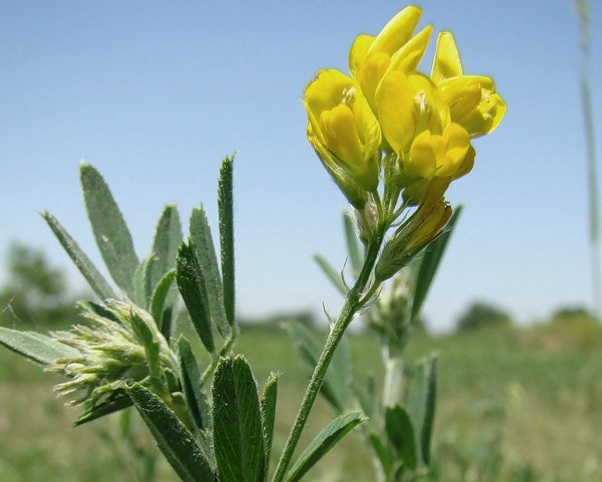
The objective of the study was to assess the content and to identify the features of main ore chemical elements accumulation and distribution in Medicago falcate growing in environment technogenic pollution conditions. The content of Zn, Cu, Pb in substrates, soils and in alfalfa (roots and shoots) growing in the tailings dumps of the Altai Mining and Processing Plant (AMPP) and in its environs was determined using atomic absorption spectrometry. It was found that 85% of alfalfa samples are characterized by increased concentrations of Zn (50–135 mg/kg of dry above-ground mass), but in areas remote from the dumps its content in alfalfa decreases to a deficit level. The content of Cu (6.5–25.9 mg/kg) in alfalfa growing in tailings dumps is higher than the background level, but does not exceed foreign standards for forage grasses. The concentration of Pb in alfalfa from the old unreclaimed AMPP tailing dump (11.31–18.47 mg/kg) is higher than in alfalfa growing on the new reclaimed waste dump (1.5–7.08 mg/kg), significantly exceeding background values and literature data. The highest content of Zn, Cu, Pb in alfalfa roots and in the upper layer of the substrate was found on the surface of the new AMPP tailing near the spontaneous household waste dump, which is an example of two environmental pollution factors combined effect. High Zn concentrations in alfalfa on the new reclaimed tailing dump are explained by additional absorption of the toxicant from the dust settling on the surface of the leaf blade, as well as penetration of alfalfa roots on the tailing dump material burial depth with extremely high concentrations of metals. In the range of metal uptake rates by alfalfa in the studied technogenic landscapes, zinc is classified as a highly accumulative element (Ax>1), while copper is a moderately accumulative element (0.1<Ax<1). As the Cu and Zn content in the substrates increases, the intensity of their uptake by alfalfa naturally decreases. It is necessary to determine the maximum permissible level of heavy metals that is innocuous for the growth and development of alfalfa.
Downloads
References
Romanenko G.A., Tyutyunnikov A.I., Goncharov P.L. Kormovyye rasteniya Rossii. [Forage plants of Russia]. Mos-cow, 1999, 370 p. (in Russ.).
Polozhiy A.V., Vydrina S.N., Kurbatskiy V.I., Nikiforova O.D. Flora Sibiri. T. 9: Fabaceae (Leguminosae). [Flora of Siberia. Vol. 9: Fabaceae (Leguminosae)]. Novosibirsk, 1994, 280 p. (in Russ.).
Budkevich T.A., Zabolotnyy A.I., Pikun P.T., Pikun M.F., Korotkov M.M. Botanika (issledovaniya): sbornik nauch-nykh trudov. [Botany (research): collection of scientific papers]. Minsk, 2011, pp. 356–372. (in Russ.).
Atlasova L.G. Vestnik Michurinskogo gosudarstvennogo agrarnogo universiteta, 2019, no. 2, pp. 77–80. (in Russ.).
Syyeva S.Ya., Karnaukhova N.A., Zvereva G.K., Khramova Ye.P., Bugayeva M.V., Ledyayeva N.V., Sal'niko-va Ye.A., Basargina O.M. Innovatsii i prodovol'stvennaya bezopasnost', 2021, no. 2 (32), pp. 46–59. https://doi.org/10.31677/ 2072-6724-2021-32-2-46-59. (in Russ.).
Gekhayev T.Ya. Agrokhimiya, 2007, no. 3, pp. 57–60. (in Russ.).
Kashin V.K. Agrokhimiya, 2018, no. 8, pp. 46–51. (in Russ.).
Karnaukhova N.A., Syyeva S.Ya. Timiryazevskiy biologicheskiy zhurnal, 2023, no. 2, pp. 6–18. (in Russ.).
Pusz A., Wiśniewska M., Kamiński A., Knosala P., Rogalski D. Resources, 2024, vol. 13(5), 66. https://doi.org/10.3390/resources13050066.
Angle J.S., Linacre N.A. International Journal of Phytoremediation, 2005, vol. 7(3), pp. 241–254. https://doi.org/10.1080/16226510500215779.
Peralta J.R., Gardea-Torresdey J.L., Tiemann K.J., Gomez E., Arteaga S., Rascon E., Parsons J.G. Bulletin of Envi-ronmental Contamination and Toxicology, 2001, vol. 66, pp. 727–734.
Boguslavskaya N.V. Ekologicheskaya bezopasnost' v APK. Referativnyy zhurnal, 2010, no. 2, p. 518. (in Russ.).
Mamayeva G.G. Ekologicheskaya bezopasnost' v APK. Referativnyy zhurnal, 2006, no. 2, p. 328. (in Russ.).
Puzanov A.V., Baboshkina S.V., Gorbachev I.V. Geokhimiya, 2012, no. 4, pp. 393–402. (in Russ.).
Kabata A. Trace elements in soils and plants. London – New-York: CRC Press Tailor and Francis Group Boca Raton, 2011, 534 p.
Alekseyev Yu.V. Tyazhelyye metally v pochvakh i rasteniyakh. [Heavy metals in soils and plants]. Leningrad, 1987, 140 p. (in Russ.).
Dobrovol'skiy V.V. Osnovy biogeokhimii. [Fundamentals of Biogeochemistry]. Moscow, 2003, 400 p. (in Russ.).
Titov A.F., Talanova V.V., Kaznina N.M., Laydinen G.F. Ustoychivost' rasteniy k tyazhelym metallam. [Plant re-sistance to heavy metals]. Petrozavodsk, 2007, 172 p. (in Russ.).
Rucin´ska-Sobkowiak R. Acta Physiol. Plant., 2016, vol. 38, 257. https://doi.org/10.1007/s11738-016-2277-5.
Sukiasyan A.R. International Journal of Biological, Biomolecular, Agricultural, Food and Biotechnological Engineer-ing, 2016, vol. 10(8), pp. 413–416.
Perel'man A.I., Kasimov N.S. Geokhimiya landshafta. [Geochemistry of the landscape]. Moscow, 1999, 768 p. (in Russ.).
Gigiyenicheskiye normativy 2.1.7.2511-09. Oriyentirovochno dopustimyye kontsentratsii (ODK) khimicheskikh ve-shchestv v pochve. [Hygienic standards 2.1.7.2511-09. Approximately permissible concentrations (APC) of chemical substances in soil]. Moscow, 2009, 11 p. (in Russ.).
Koval'skiy V.V. Trudy Biogeokhimicheskoy laboratorii, 1991, vol. 22, pp. 5–24. (in Russ.).
Kabata-Pendias A., Motowicka-Terelak T., Piotrowska M., Terelak H., Witek T. Ocena Stopnia Zanieczyszczenia Gleb i Roslin Metalami Ciezkimi i Siark. Ramowe Wytyczne Dla Rolnictwa, IUNG. Poland, Puławy, 1993, 23 p.
Feshchenko V.P. Vestnik Altayskogo gosudarstvennogo agrarnogo universiteta, 2014, no. 10 (120), pp. 33–36. (in Russ.).
Golov V.I., Samokhvalova O.S., Anan'yeva E.V., Timofeyev A.N. Vestnik KrasGAU, 2007, no. 2, pp. 59–62. (in Russ.).
Zaytsev G.N. Matematika v eksperimental'noy botanike. [Mathematics in experimental botany]. Moscow, 1990, 296 p. (in Russ.).
Khimiya tyazhelykh metallov, mysh'yaka i molibdena v pochvakh [Chemistry of heavy metals, arsenic and molybdenum in soils], ed. N.G. Zyrin. Moscow, 1985, 300 p. (in Russ.).
Ghelich S., Zarinkamar F., Soltani B.M., Niknam V. Environmental Science and Pollution Research, 2014, vol. 21, pp. 14091–14098.
Copyright (c) 2026 Chemistry of plant raw material

This work is licensed under a Creative Commons Attribution 4.0 International License.

This work is licensed under a Creative Commons Attribution 4.0 International License.
The authors, which are published in this journal, agree to the following conditions:
1. Authors retain the copyright to the work and transfer to the journal the right of the first publication along with the work, at the same time licensing it under the terms of the Creative Commons Attribution License, which allows others to distribute this work with the obligatory indication of the authorship of this work and a link to the original publication in this journal .
2. The authors retain the right to enter into separate, additional contractual agreements for the non-exclusive distribution of the version of the work published by this journal (for example, to place it in the university depository or to publish it in a book), with reference to the original publication in this journal.
3. Authors are allowed to post their work on the Internet (for example, in a university repository or on their personal website) before and during the review process of this journal, as this may lead to a productive discussion, as well as more links to this published work.