PREPARATION OF STARCH-BASED HYDROGELS USING VARIOUS CROSSLINKING AGENTS
UDC 544.773.432:547.458.82

Abstract
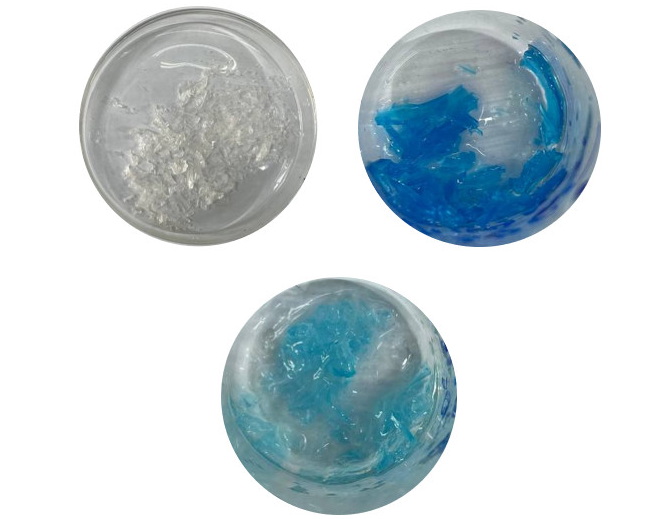
This study presents the results of synthesizing and characterizing starch-based hydrogels crosslinked with different reagents: lactic acid, maleic anhydride, and phthalic anhydride. The objective was to investigate the effects of crosslinking agent type and concentration, as well as synthesis duration, on the physicochemical and functional properties of these hydrogels. Sixteen samples were synthesized, and their key parameters were determined: swelling degree (1.18–1.88 g/g), gel fraction (63–85%), sorption capacity, rheological properties, and IR spectroscopic characteristics. Optimal synthesis duration for achieving maximum swelling was found to be 2 hours. The highest swelling degree and sorption capacity were observed in hydrogels crosslinked with phthalic anhydride, which also demonstrated controlled release of sorbed substances. Tests assessed the impact of these hydrogels on the germination and morphological parameters of wheat sprouts (cv. 'Altai 70'). The hydrogels, particularly when combined with carboxymethylated wood additive, enhanced germination rate, stem length, and plant biomass. IR spectroscopy confirmed the formation of ester bonds in the hydrogel structure, while rheological analysis revealed an increase in reaction mixture viscosity during crosslinking. These findings highlight the potential of phthalic anhydride-modified starch hydrogels for agricultural applications.
Downloads
References
Kasemsiri P., Jetsrisuparb K., Knijnenburg J. T. N., Srikhao N., Okhawilai M. Chapter 5 – Hydrogels based on natural polysaccharides. In Book: Natural and Synthetic Hydrogels. Ed. Narain R. Elsevier, 2025. Pp. 97–113. https://doi.org/10.1016/B978-0-443-16168-1.00005-2.
Li S., Yao F., Liu Q., Tang C., Zhuo Y., Dai M., Lv Q., Zhong X. Materials & Design, 2025, vol. 259, Article 114876. https://doi.org/10.1016/j.matdes.2025.114876.
Posocco B., Dreussi E., de Santa J. Materials, 2015, vol. 8, pp. 2569–2615. https://doi.org/10.3390/ma8052569.
Zhang Y., Zheng S.-Y., Luo D. et al. Nature Nanotechnology, 2012, vol. 7, pp. 816–820. https://doi.org/10.1038/nnano.2012.180.
Chamkouri H., Chamkouri M. American Journal of Biomedical Science & Research, 2021, vol. 11, № 6, pp. 485–493. https://doi.org/10.34297/AJBSR.2021.11.001682.
Xue H., Wang P., Ji L., Zhang K., Ge S., Tan J. Journal of Agriculture and Food Research, 2025, vol. 24, Article 102395. https://doi.org/10.1016/j.jafr.2025.102395.
Zhang J., Liu Z., Sun J., Yao Z., Lu H. Carbohydrate Polymers, 2025, vol. 350, Article 123048. https://doi.org/10.1016/j.carbpol.2024.123048.
Qin Y., Wang J., Qiu C., Xu X., Jin Z. Journal of Agricultural and Food Chemistry, 2019, vol. 67. N14, pp. 3966–3980. https://pubs.acs.org/doi/abs/10.1021/acs.jafc.8b05147.
Kayati F.N., Purnomo C.W., Kusumastuti Y., Rochmadi. Green Processing and Synthesis, 2023, vol. 12, no. 1, Article 20230151. https://doi.org/10.1515/gps-2023-0151.
Lu J., Gu J., Hu O., Fu Y., Ye D., Zhang X., Zheng Y., Hou L., Liu H., Jiang X. Journal of Materials Chemistry A.,2021, vol. 9, no. 34, pp. 18406–18420. https://doi.org/10.1039/D1TA04336F.
Zhang L., Yang C., Yan L. Journal of Bioactive and Compatible Polymers, 2005, vol. 20, no. 3, pp. 297–314. https://doi.org/10.1177/0883911505053382.
Holnazarov B.A., Turaev H.H., Ahatov A.A. Universum: Khimiya i Biologiya, 2020, no. 10, pp. 37–40. (in Russ.).
Taganbekova Z.K., Savkin V.A., Markin V.I. Khimiya rastitel'nogo syr'ya, 2025, no. 4, pp. 162–176. https://doi.org/10.14258/jcprm.20250417817. (in Russ.).
Nechiporenko A.P., Orekhova S.M., Plotnikova L.V. i dr. Spetsializirovannyy praktikum po fiziko-khimicheskim metodam analiza. Chast' 2. Elektronnaya i IK-spektroskopiya otrazheniya, lyuminestsentnaya i rentgenofluorestsentnaya spektroskopiya, refraktometriya, termometriya, kineticheskaya pH-metriya, indikatornyy metod. [Spe-cialized practical course on physicochemical methods of analysis. Part 2. Electronic and IR reflectance spectroscopy, lu-minescence and X-ray fluorescence spectroscopy, refractometry, thermometry, kinetic pH-metry, indicator method]. St. Petersburg, 2016. 182 p. (in Russ.).
Kalyuta Ye.V., Mal'tsev M.I., Markin V.I., Mashkina Ye.I. Khimiya rastitel'nogo syr'ya, 2021, no. 2, pp. 361–368. https://doi.org/10.14258/jcprm.2021029732. (in Russ.).
GOST 12038-84. Semena sel'skokhozyaystvennykh kul'tur. Metody opredeleniya vskhozhesti : mezhgosudarstvennyy standart. [GOST 12038-84. Agricultural crop seeds. Germination determination methods: interstate standard]. Moscow, 2011, 25 p. (in Russ.).
Elkina Ye. A., Shubakov A. A., Ovodov Y.S. Khimiya rastitel'nogo syr'ya, 2002, no. 2, pp. 105–109. (in Russ.).
Nasution H., Harahap H., Dalimunthe N.F. et al. Gels, 2022, vol. 8, no, 9. Article 568. https://doi.org/10.3390/gels8090568.
Alavi M., Nokhodchi A. Carbohydrate Polymers, 2020, vol. 227. Article 115349. https://doi.org/10.1016/j.carbpol.2019.115349.
Ai Y., Jane J. Starch – Stärke, 2015, vol. 67, no. 3–4, pp. 213–224. https://doi.org/10.1002/star.201400201.
Kim Y., Jung C. International Journal of Polymer Science, 2022, vol. 2022. Article ID 2941406. https://doi.org/10.1155/2022/2941406.
Kalyuta Ye.V., Mal'tsev M.I., Markin V.I., Katrakov I.B., Bazarnova N.G. Khimiya rastitel'nogo syr'ya, 2013, no. 3, pp. 249–253. https://doi.org/10.14258/jcprm.1303249. (in Russ.).
Kalyuta Ye.V., Mal'tsev M.I., Markin V.I., Katrakov I.B., Bazarnova N.G. Khimiya rastitel'nogo syr'ya, 2016, no. 2, pp. 145–152. https://doi.org/10.14258/jcprm.2016021296. (in Russ.).
Mal'tsev M.I., Kalyuta Ye.V., Bazarnova N.G., Markin V.I. Vestnik Altayskogo gosudarstvennogo agrarnogo universiteta, 2020, no. 12 (194), pp. 39–45. (in Russ.).
Copyright (c) 2026 Chemistry of plant raw material

This work is licensed under a Creative Commons Attribution 4.0 International License.

This work is licensed under a Creative Commons Attribution 4.0 International License.
The authors, which are published in this journal, agree to the following conditions:
1. Authors retain the copyright to the work and transfer to the journal the right of the first publication along with the work, at the same time licensing it under the terms of the Creative Commons Attribution License, which allows others to distribute this work with the obligatory indication of the authorship of this work and a link to the original publication in this journal .
2. The authors retain the right to enter into separate, additional contractual agreements for the non-exclusive distribution of the version of the work published by this journal (for example, to place it in the university depository or to publish it in a book), with reference to the original publication in this journal.
3. Authors are allowed to post their work on the Internet (for example, in a university repository or on their personal website) before and during the review process of this journal, as this may lead to a productive discussion, as well as more links to this published work.