TECHNOLOGICAL ASPECTS OF OBTAINING AND RHEOLOGICAL PROPERTIES OF A SOFT DOSAGE FORM OF GUANIDINE PECTIN WITH POLYFUNCTIONAL BIOLOGICAL ACTIVITY
UDC 541.64: 615.45

Abstract
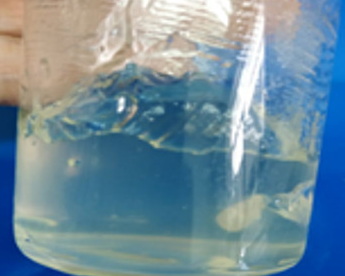
The article presents the technology of obtaining a soft dosage form of guanidine pectin synthesized at the Institute of Bioorganic Chemistry, containing 0.5% guanidine pectin as an active substance in the form of hydrochloride, with a guanidine content of 24.7%, a pKα value of 9.7±0.1 and a substitution degree of 90 mol%, possessing antimicrobial and wound-healing properties. To obtain a soft dosage form for local use, guanidine pectin was included in the gel base. Comparative studies of the rheological properties of gel bases with carbopol concentrations of 0.5, 1.0 and 1.5% and guanidine pectin gel were carried out. The results of the study showed that the dynamic viscosity of the gel base directly depends on the concentration of carbopol. In the case of a carbopol content of more than 0.5%, a change in the rheological properties of the gel bases occurs, which do not meet the necessary requirements. It was found that when adding 0.5% guanidine pectin to the gel base, the dynamic viscosity coefficient of the structured system decreases slightly from 4.5 to 4.3 Pa·s. However, increasing the concentration of guanidine pectin to 0.75 and 1.0% contributes to a sharp drop in the dynamic viscosity of the gel base. The developed gel containing 0.5% guanidine pectin does not delaminate or change color for 27 months, retains its shape with a dynamic viscosity coefficient of (4.5 Pa·s) at a shear rate of 0.33 s-1, i.e. it is stable during natural storage.
Downloads
References
Kim K., Chen W.C.W., Heo Y., Wang Y. Progress in Polymer Science, 2016, vol. 60, pp. 18–50. https://doi.org/10.1016/j.progpolymsci.2016.05.004.
Timofeeva L., Kleshcheva N. Applied Microbiology and Biotechnology, 2011, vol. 89, no. 3, pp. 475–492. https://doi.org/10.1007/s00253-010-2920-9.
Wender P.A., Rothbard J.B., Jessop T.C., Kreider E.L., Wylie B.L. American Chemical Society, 2002, vol. 124, no. 45, pp. 13382–13383. https://doi.org/10.1021/ja0275109.
Gilbert P., Moore L.E. Journal of Applied Microbiology, 2005, vol. 99, pp. 703–715. https://doi.org/10.1111/j.1365-2672.2005.02664.x.
Qian L., Guan Y., He B., Xiao H. Polymer, 2008, vol. 49, no. 10, pp. 2471–2475. https://doi.org/10.1016/j.polymer.2008.03.042.
Grigor'yeva M.N., Stel'makh S.A., Astakhova S.A., Tsenter I.M., Bazaron L.U., Batoyev V.B., Mognonov D.M. Khimiko-farmatsevticheskiy zhurnal, 2015, vol. 49, no. 2, pp. 29–33. https://doi.org/10.30906/0023-1134-2015-49-2-29-33. (in Russ.).
Choi H., Kim K.-J, Lee D.G. Fungal Biology, 2017, vol. 121, no. 1, pp. 53–60. https://doi.org/10.1016/j.funbio.2016.09.001.
Feng P., Qiu H., Luo Y., Hu J., Cao Y., Pang Q., Mou X., Hou R., Hou W., Zhu Y. ACS Biomaterials Science & En-gineering, 2021, vol. 7, no. 9, pp. 4557–4568. https://doi.org/10.1021/acsbiomaterials.1c00600.
Lebedeva S.N., Ochirov O.S., Stel'makh S.A., Grigor'yeva M.N., Zhamsaranova S.D., Mognonov D.M. Acta Bio-medica Scientifica, 2017, vol. 2, no. 2, pp. 93–96. https://doi.org/10.12737/article_59fad51d481658.42549272. (in Russ.).
Akhmedov O.R., Shomurotov Sh.A., Turayev A.S. Khimiya rastitel'nogo syr'ya, 2022, no. 3, pp. 81–90. https://doi.org/10.14258/jcprm.20220310882. (in Russ.).
Akhmedov O.R., Shomurotov Sh.A., Turayev A.S., Sidorenko A.V. Razrabotka i registratsiya lekarstvennykh sredstv, 2022, vol. 11, no. 2, pp. 38–45. https://doi.org/10.33380/2305-2066-2022-11-2-38-45. (in Russ.).
Rathod H.J., Mehta D.P. Acta Scientifica. International Journal of Pharmaceutical Science, 2015, vol. 1, no. 1, pp. 33–47.
Osada Y., Ping G.J., Tanaka Y. Journal of Macromolecular Science, Part C: Polymer Reviews, 2004, vol. 44, no. 1, pp. 87–112.
Anurova M.N. Khimiko-farmatsevticheskiy zhurnal, 2015, vol. 49, no. 9, pp. 39–46. https://doi.org/10.30906/0023-1134-2015-49-9-39-46. (in Russ.).
GOST 33-82. Nefteprodukty. Metod opredeleniya kinematiki i rascheta dinamicheskoy vyazkosti mekhanicheskimi sredstvami. [GOST 33-82. Petroleum products. Method for determining kinematics and calculating dynamic viscosity by mechanical means]. Moscow, 1982. (in Russ.).
GOST 29188.2-2014. Produktsiya parfyumerno-kosmeticheskaya. Metod opredeleniya vodorodnogo pokazatelya pH. [GOST 29188.2-2014. Perfumery and cosmetic products. Method for determining the hydrogen index pH]. Moscow, 2017. (in Russ.).
Akhmedov O.R. Antimikrobnaya, fungitsidnaya aktivnost' guanidinsoderzhashchikh proizvodnykh polisakharidov: diss. … PhD po khimicheskim naukam. [Antimicrobial and fungicidal activity of guanidine-containing derivatives of polysaccharides: PhD diss. in chemical sciences]. Tashkent, 2019, 118 p. (in Russ.).
Slyusar O.I., Kalmykova T.P., Kermanian F. Khimiko-farmatsevticheskiy zhurnal, 2003, vol. 37, no. 5, pp. 51–53. https://doi.org/10.30906/0023-1134-2003-37-5-51-53. (in Russ.).
Stefanova A.V. Doklinicheskoye issledovaniye lekarstvennykh sredstv (metodicheskiye rekomendatsii). [Preclinical studies of drugs (methodological recommendations)]. Kyiv, 2002. (in Russ.).
Akhmedov O.R., Filatova A.V., Shomurotov Sh.A., Turaev A.S. Pharmaceutical Chemistry Journal, 2022, vol. 56, no. 7, pp. 899–905. https://doi.org/10.1007/s11094-022-02732-w.
GOST 32373-2013. Metody ispytaniy po vozdeystviyu khimicheskoy produktsii na organizm cheloveka. Osnovnyye tre-bovaniya k provedeniyu ispytaniy po otsenke ostroy toksichnosti pri nakozhnom postuplenii. [GOST 32373-2013. Test methods for the effects of chemical products on the human body. Basic requirements for conducting tests to assess acute toxicity upon dermal administration]. Moscow, 2019. (in Russ.).
Copyright (c) 2025 Chemistry of plant raw material

This work is licensed under a Creative Commons Attribution 4.0 International License.

This work is licensed under a Creative Commons Attribution 4.0 International License.
The authors, which are published in this journal, agree to the following conditions:
1. Authors retain the copyright to the work and transfer to the journal the right of the first publication along with the work, at the same time licensing it under the terms of the Creative Commons Attribution License, which allows others to distribute this work with the obligatory indication of the authorship of this work and a link to the original publication in this journal .
2. The authors retain the right to enter into separate, additional contractual agreements for the non-exclusive distribution of the version of the work published by this journal (for example, to place it in the university depository or to publish it in a book), with reference to the original publication in this journal.
3. Authors are allowed to post their work on the Internet (for example, in a university repository or on their personal website) before and during the review process of this journal, as this may lead to a productive discussion, as well as more links to this published work.