THE METHOD OF QUANTITATIVE DETERMINATION OF THE AMOUNT OF FLAVONOIDS IN THE LEAVES OF THE TATAR MAPLE (ACER TATARICUM L.)
UDC 615.322

Abstract
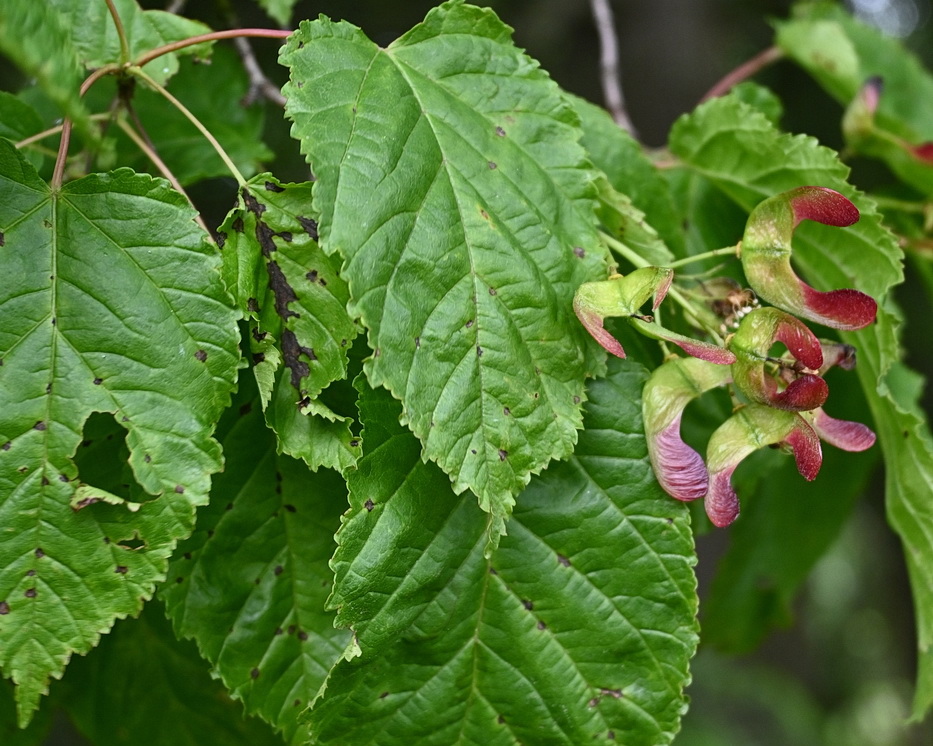
Tatar maple (Acer tataricum L.) is a deciduous tree or shrub up to 8 m tall. This plant is widespread in Central, Eastern and Southeastern Europe, Asia Minor and the Caucasus. Extracts of Tatar maple have been used in traditional medicine for many years due to their antioxidant, anti-inflammatory, antidiabetic, hepatoprotective, antitumor activity, which may be due to various groups of biologically active compounds such as triterpenoids, phenol carboxylic acids and their derivatives, flavonoids, nitrogen-containing compounds. The pharmacological activity of the leaves of the Tatar maple is determined by biologically active compounds, mainly of a phenolic nature, in particular, flavonoids and derivatives of gallic acid (ginnalin A, etc.).
As a result of the conducted research, a method for quantifying the amount of flavonoids in the leaves of the Tatar maple has been developed. Differential spectrophotometry conducted in accordance with the OFS was used as a research method.1.2.1.1.0003.15 "Spectrophotometry in the ultraviolet and visible regions". The spectral characteristics of water-alcohol extracts were evaluated using a Specord 40 spectrophotometer (Analytik Jena AG, Germany).
It was determined that in all electronic spectra of extracts from the leaves of the Tatar maple, a bathochromic shift of the long-wavelength band is observed in the presence of aluminum chloride, which confirms the presence of flavonoids. Under the conditions of differential spectrophotometry, an absorption maximum is observed in the region of 412±2 nm, which indicates the expediency of using a routine having an absorption maximum at a wavelength of 412 nm in the analysis technique. The optimal parameters of extraction of raw materials were determined: extractant – 70% ethyl alcohol, the ratio "raw material-extractant" – 1 : 30, extraction time – 45 min, the degree of grinding of raw materials – 2 mm, analytical wavelength – 412 nm.
It was determined that the content of the sum of flavonoids in terms of rutin in the leaves of the Tatar maple varies from 3.18±0.05 to 3.56±0.05%. The error of a single determination with a 95% confidence probability is ± 1.47%.
The results obtained can be used in the development of a draft FS for a new type of medicinal plant raw material "Tatar Maple leaves" for introduction into the State Pharmacopoeia of the Russian Federation.
Downloads
References
Kostelova G.S., Rusanov N.F., Usmanov A.U., Mavzhudov A.A. Dendrologiya Uzbekistana. [Dendrology of Uzbek-istan]. Tashkent, 1973, vol. 5, pp. 3–157. (in Russ.).
Bi W., Gao Y., Shen J. et al. J. Ethnopharmacol., 2016, vol. 31, p. 60.
Gao J., Liao P.C., Huang B.H., Yu T., Zhang Y.Y., Li J.Q. Sci. Rep., 2020, vol. 10, no. 1, 21178. https://doi.org/10.1038/s41598-020-78145-0.
Zhilin S.G. Zhizn' rasteniy. [Life of Plants]. Moscow, 1981, vol. 5-2, pp. 264–266. (in Russ.).
Vstovskaya T.N. Rastitel'nyy mir Aziatskoy Rossii, 2010, no. 1, pp. 101–111. (in Russ.).
Zamyatina B.N. Derev'ya i kustarniki SSSR: dikorastushchiye, kul'tiviruyemyye i perspektivnyye dlya introduktsii. [Trees and shrubs of the USSR: wild, cultivated and promising for introduction]. Moscow; Leningrad, 1958, vol. 4, pp. 405–406. (in Russ.).
Yednich Ye.M. Tolstikova T.N. Vestnik AGU, 2015, no. 3, pp. 101–105. (in Russ.).
Valyagina-Malyutina Ye.T. Derev'ya i kustarniki Sredney polosy Yevropeyskoy chasti Rossii: Opredelitel'. [Trees and shrubs of the central zone of the European part of Russia: Identifier]. St. Petersburg, 1998, pp. 80–82. (in Russ.).
Flora SSSR [Flora of the USSR], ed. V.L. Komarova. Moscow; Leningrad, 1949, vol. 14, 793 p. (in Russ.).
Bi W., He C.N., Li X.X., Zhou L.Y., Liu R.J., Zhang S., Li G.Q., Chen Z.C., Zhang P.F. Food Funct, 2018, vol. 9, no. 5, pp. 2809–2819.
Bi W., Liu H., Shen J., Zhang L.H., Li P., Peng B., Cao L., Zhang P., He C., Xiao P. Sci. Rep., 2017, vol. 7, no. 1, 15893.
Jin Y.J., Ji Y., Jang Y.P., Choung S.Y. Molecules, 2021, vol. 26, no. 3, 662. https://doi.org/10.3390/molecules26030662.
Bi W., He C., Ma Y., Shen J., Zhang L.H., Peng Y., Xiao P. Acta Pharm Sin B, 2016, vol. 6, no. 2, pp. 170–181.
Rippin, Beniwal V., Sharma A., Singh B.J, Ramniwas S., Sak K., Kumar S., Sharma A.K. Explor Target Antitumor Ther, 2023, vol. 4, pp. 208–216. https://doi.org/10.37349/etat.2023.00129.
Khozinova K.R., Kurkin V.A., Ryzhov V.M. Sbornik trudov konferentsii «Sovremennyye problemy farmatsii», posvyashchennaya 105-letiyu Samarskogo gosudarstvennogo meditsinskogo universiteta. [Collection of papers of the conference "Modern problems of pharmacy", dedicated to the 105th anniversary of the Samara State Medical Universi-ty]. Samara, 2024, pp. 221–224. (in Russ.).
Gosudarstvennaya Farmakopeya Rossiyskoy Federatsii. XV izdaniye. [State Pharmacopoeia of the Russian Federation. XV edition]. Moscow, 2023. URL: https://pharmacopoeia.regmed.ru/pharmacopoeia/izdanie-15/. (in Russ.).
Kurkina A.V. Flavonoidy farmakopeynykh rasteniy: monografiya. [Flavonoids of pharmacopoeial plants: monograph]. Samara, 2012, 290 p. (in Russ.).
Kurkin V.A. Farmakognoziya: uchebnik dlya studentov farmatsevticheskikh vuzov (fakul'tetov). 4-ye izd., pererab. i dop. [Pharmacognosy. Textbook for students of pharmaceutical universities (faculties). 4th ed., revised and enlarged]. Samara, 2019, 1278 p. (in Russ.).
Korul'kin D.Yu., Abilov Zh.A., Muzychkina R.A., Tolstikov G.A. Prirodnyye flavonoidy. [Natural flavonoids]. Novo-sibirsk, 2007, 232 p. (in Russ.).
Georgiyevskiy V.P., Komissarenko N.F., Dmitruk S.Ye. Biologicheski aktivnyye veshchestva lekarstvennykh rasteniy. [Biologically active substances of medicinal plants]. Novosibirsk, 1990, pp. 234–236. (in Russ.).
Kupriyanova Ye.A., Kurkin V.A. Aspirantskiy vestnik Povolzh'ya, 2018, no. 5–6, pp. 17–21. (in Russ.).
Bubenchikova V.N., Starchak Yu.A. Nauchnyye vedomosti Belgorodskogo gosudarstvennogo universiteta. Seriya: Meditsina. Farmatsiya, 2012, no. 22, pp. 157–160. (in Russ.).
Vasil'yev V.P. Analiticheskaya khimiya. Kniga 2: Fiziko-khimicheskiye metody analiza: ucheb. dlya stud. vuzov, obuchayushchikhsya po khimiko-tekhnol. spets. 5-ye izd., stereotip. [Analytical Chemistry. Book 2: Physicochemical Methods of Analysis: a textbook for students of higher education institutions studying chemical engineering specialties. 5th ed., stereotype]. Moscow, 2005, 383 p. (in Russ.).
Kurkina A.V. Voprosy biologicheskoy, meditsinskoy i farmatsevticheskoy khimii, 2013, no. 5, p. 38. (in Russ.).
Kurkin V.A., Braslavskiy V.B., Avdeyeva Ye.V., Pravdivtseva O.Ye. i dr. Proizvodstvennaya praktika po stan-dartizatsii lekarstvennogo rastitel'nogo syr'ya i fitopreparatov: ucheb. posobiye dlya studentov farmatsevticheskikh vuzov. [Industrial practice in standardization of medicinal plant materials and phytopreparations: a teaching aid for stu-dents of pharmaceutical universities]. Samara, 2007, 126 p. (in Russ.).
Kurkina A.V. Eksperimental'no-teoreticheskoye obosnovaniye podkhodov k standartizatsii syr'ya i preparatov farma-kopeynykh rasteniy, soderzhashchikh flavonoidy: avtoref. … dokt. farm. nauk. [Experimental and theoretical substantia-tion of approaches to standardization of raw materials and preparations of pharmacopoeial plants containing flavonoids: author's abstract. Doctor of Pharmaceutical Sciences]. Samara, 2013, 48 p. (in Russ.).
Copyright (c) 2026 Chemistry of plant raw material

This work is licensed under a Creative Commons Attribution 4.0 International License.

This work is licensed under a Creative Commons Attribution 4.0 International License.
The authors, which are published in this journal, agree to the following conditions:
1. Authors retain the copyright to the work and transfer to the journal the right of the first publication along with the work, at the same time licensing it under the terms of the Creative Commons Attribution License, which allows others to distribute this work with the obligatory indication of the authorship of this work and a link to the original publication in this journal .
2. The authors retain the right to enter into separate, additional contractual agreements for the non-exclusive distribution of the version of the work published by this journal (for example, to place it in the university depository or to publish it in a book), with reference to the original publication in this journal.
3. Authors are allowed to post their work on the Internet (for example, in a university repository or on their personal website) before and during the review process of this journal, as this may lead to a productive discussion, as well as more links to this published work.