PRIMARY METABOLITES POTERIUM POLYGAMUM WALDST. ET KIT.
UDC 542.062

Abstract
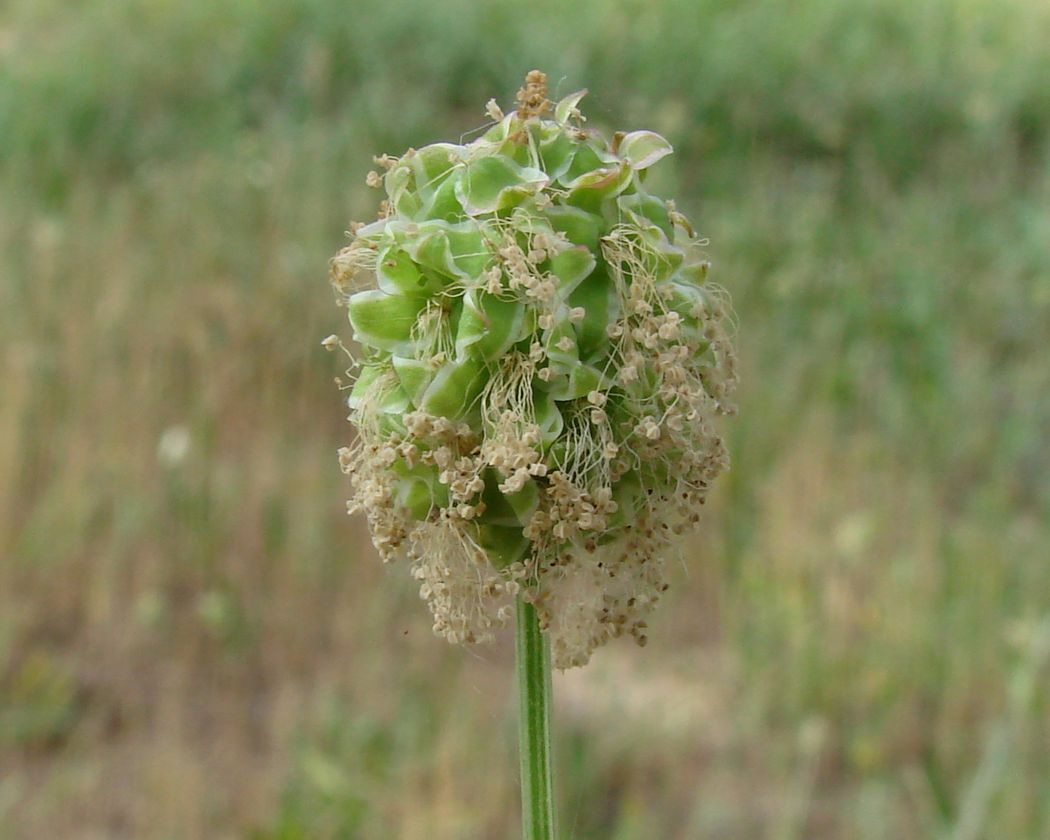
The plant Poterium polygamum, or also another scientific name Balearic burnet (Sanguisorba minor), is considered a valuable raw material for the medical and cosmetic industries. This article provides a comparative and quantitative analysis of water-soluble vitamins and amino acids using the gradient elution mode based on the high-performance liquid chromatography (HPLC) method, then an analysis of proteins by the Kjeldahl nitrogen method with subsequent recalculation for protein, as well as information on the areas of application of the Poterium polygamum Waldst. et Kit. plant in medicine. During the study, the plant was found to contain the following vitamins: thiamine (B1), riboflavin (B2), pyridoxine (B6), folic acid (B9), cobalamin (B12), ascorbic acid (C), nicotinic acid (PP). The samples for the study were the above-ground part (stem, leaves and flowers of the plant) and the underground part (root and rhizome), collected and dried at the end of spring. As a result of the study showed that B vitamins in the period of plant growth are mainly concentrated in the root and stem parts. The amount of ascorbic acid in this period was also relatively high. According to the Kjeldahl method, the nitrogen content was 2.11% and proteins were 13.18% in the above-ground part, and in the underground part, nitrogen was 1.76%, proteins were 11.01%. Poterium polygamum contains 19 amino acids, 8 of which are essential (monoaminocarbon acids: threonine, valine, methionine, isoleucine, leucine, phenylalanine; diaminocarbon acids: lysine, tryptophan) and 11 interchangeable (monoaminodicarboxylic acids: aspartic acid, glutamic acid, asparagine, glutamine; monoaminocarbon acid: serine, glycine, cysteine, alanine; diaminocarbon acid: arginine, tyrosine, proline).
Downloads
References
Galushko A.I. Opredelitel' rasteniy senokosov i pastbishch Severnogo Kavkaza. [Identification of plants of hayfields and pastures of the North Caucasus]. Nal'chik, 1964, 372 p. (in Russ.).
Medvedev P.F. Pishchevyye rasteniya SSSR. Rastitel'noye syr'ye SSSR: v 2 t. [Food plants of the USSR. Plant raw ma-terials of the USSR: in 2 volumes]. Moscow; Leningrad, 1957, vol. 2, pp. 5–151. (in Russ.).
Fedotova V.V., Okhremchuk A.V., Chelombit'ko B.A. Nauchnyye vedomosti. Seriya: Meditsina. Farmatsiya, 2012, no. 16 (135), pp. 173–175. (in Russ.).
Soldatenkov S.V. Biokhimiya organicheskikh kislot rasteniy. [Biochemistry of organic acids of plants]. Leningrad, 1971, 143 p. (in Russ.).
Bochkov D.V. Khimiya rastitel'nogo syr'ya, 2011, no. 1, pp. 119–122. (in Russ.).
Kshnikatkina A.N., Yes'kin V.N., Zuyeva Ye.A. Niva Povolzh'ya, 2008, no. 2(7), pp. 30–35. (in Russ.).
Zhdanova A.A. Produktivnost' chernogolovnika mnogobrachnogo v zavisimosti ot priyemov vozdelyvaniya v uslovi-yakh lesostepi Srednego Povolzh'ya. [Productivity of Poterium polygamum depending on cultivation methods in the forest-steppe conditions of the Middle Volga region]. Penza, 2018, p. 19. (in Russ.).
Okhremchuk V.V., Chelombit'ko V.A. Fundamental'naya meditsina, 2012, pp. 127–130. (in Russ.).
Aysun İ.G. Еffects of medicinal plant sanguisorba minor subsp. balearica on selected cyp450 isozymes and proin-flammatory cytokines activity in inflammation induced rat model: an immunochemical approach. in partial fulfillment of the requirements for the degree of doctor of philosophy in biochemistry. 2021, p. 9.
Gagiyeva L.Ch. Zemledeliye, 2009, no. 1, pp. 36–37. (in Russ.).
Zabolotnova M.V. Biomorfologicheskiye osobennosti i priyomy vozdelyvaniya Chernogolovnika mnogobrachnogo na korm i semena v srednem predural'ye. [Biomorphological features and cultivation methods of Poterium polygamum for forage and seeds in the middle Urals]. Perm', 2021, p. 16. (in Russ.).
Kaneta M.H., Hikichi S., Sugiyama E.N. Agric. Biol. Chem., 1979, vol. 43, no. 3, pp. 657– 658.
Alenin P.G. Forage production, 2011, vol. 5, pp. 21–24.
Karomatov I.D. Fitoterapiya – rukovodstvo dlya vrachey. [Phytotherapy – a guide for doctors]. Bukhara, 2018, vol. 1. (in Russ.).
Nguyen T.T., Cho S.O., Ban J.Y., Kim J.Y., Ju H.S., Koh S.B., Song K.S., Seong Y.H. Biol. Pharm. Bull., 2008, vol. 31(11), p. 203.
Yang J.H., Yoo J.M., Cho W.K., Ma J.Y. Mediators Inflamm, 2016, 2947390. https://doi.org/10.1155/2016/2947390.
Zhao Z., He X., Zhang Q., Wei X., Huang L., Fang J.C., Wang X., Zhao M., Bai Y., Zheng X. Am. J. Chin. Med., 2017, vol. 45(2), pp. 199–224. https://doi.org/10.1142/S0192415X17500136.
Ergasheva F.Sh., Kushiev Kh.Kh., Matchanov A.D., Ishimov U.J., Khushmatov Sh.S., Pozilov K.M. Int. J. Curr. Microbiol. App. Sci., 2019, vol. 8 (5), pp. 734–742.
Steven A., Cohen Daviel J. J. Analytical Biochemistry, 1988, vol. 17, no. 1, pp. 1–16.
Rukovodstvo R 4.1.1672-03. Metody kontrolya. Khimicheskiye faktory. Rukovodstvo po metodam kontrolya kache-stva i bezopasnosti biologicheski aktivnykh dobavok k pishche. [Guideline R 4.1.1672-03. Control methods. Chemical factors. Guidelines for quality and safety control methods for biologically active food supplements]. Moscow, 2004. (in Russ.).
Safin M.G. Biokhimiya vitaminov. [Biochemistry of vitamins]. Tashkent, 2015, 55 p. (in Russ.).
Askarov I.R. Mnogoprofil'nyy nauchnyy zhurnal, 2024, pp. 402–408. (in Russ.).
Aminzhonova Ch.A., Dzhaloldinova M.M. Vostochnoye Vozrozhdeniye: Innovatsionnyye, obrazovatel'nyye, yestestvennyye i sotsial'nyye nauki, 2023, vol. 2, pp. 288–296. (in Russ.).
Copyright (c) 2025 Chemistry of plant raw material

This work is licensed under a Creative Commons Attribution 4.0 International License.

This work is licensed under a Creative Commons Attribution 4.0 International License.
The authors, which are published in this journal, agree to the following conditions:
1. Authors retain the copyright to the work and transfer to the journal the right of the first publication along with the work, at the same time licensing it under the terms of the Creative Commons Attribution License, which allows others to distribute this work with the obligatory indication of the authorship of this work and a link to the original publication in this journal .
2. The authors retain the right to enter into separate, additional contractual agreements for the non-exclusive distribution of the version of the work published by this journal (for example, to place it in the university depository or to publish it in a book), with reference to the original publication in this journal.
3. Authors are allowed to post their work on the Internet (for example, in a university repository or on their personal website) before and during the review process of this journal, as this may lead to a productive discussion, as well as more links to this published work.