EFFECTIVE BIOACTIVE COMPOUND FOR AGRICULTURE BASED ON LOCAL RAW MATERIALS
UDC 635.21:631.8

Abstract
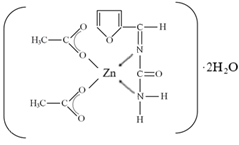
This article examines the biological activity and physicochemical analysis of the compound of zinc acetate with furfurolidene urea, obtained from agricultural waste and local raw materials. Laboratory results of its positive effect on plant development and antagonistic properties against pathogenic fungi that currently cause various plant diseases and cause serious harm to them are presented. The information obtained as a result of studying the ecological and toxicological properties of this biologically active compound is presented. The species and strains of fungi and bacteria on which an inhibitory effect was detected, as well as the minimum inhibitory concentrations, are indicated. The mechanism of biological activity has been studied, for example, stimulation of plant defense reactions, direct toxic effects on pathogens, regulation of growth and development processes. Laboratory results are presented on the positive effect of the complex compound of furfurolidene-urea with zinc acetate on plant development and antagonistic properties against pathogenic fungi that today cause various plant diseases and cause serious harm to them. The information obtained as a result of studying the ecological and toxicological properties of this biologically active compound is presented. It has been established that this biologically active compound, in terms of acute toxicity, belongs to substances of hazard class IV – low-hazard compounds. The compound, having a weak functional-cumulative effect, has a slight irritating effect on the mucous membrane of the eyes, and has no negative effect on the skin.
Downloads
References
World fertilizer trends and outlook to 2018. Rome, 2015, 66 p.
Łozowicka B., Hrynko I., Kaczyński P. J. Plant Protection Res., 2015, pp. 142–150. https://doi.org/10.1515/jppr-2015-0018.
Matyjaszczyk E. J. Plant Protection Res., 2011, vol. 51(3), pp. 217–224. https://doi.org/10.2478/v10045-011-0037-5.
Buga S.F. Zashchita i karantin rasteniy, 2001, no. 3, pp. 18–25. (in Russ.).
Ganiyev M.M. Khimicheskiye sredstva zashchity rasteniy. [Chemical plant protection products]. Moscow, 2006, pp. 64–66. (in Russ.).
Buga S.F., Zhukovskiy A.G., Il'yuk A.G., Radyna A.A., Zherdetskaya T.N., Zhuk Ye.I. Nauchnyye osnovy effektiv-nogo ispol'zovaniya protraviteley semyan dlya zashchity zernovykh kul'tur ot bolezney. [Scientific basis for the effec-tive use of seed dressings to protect grain crops from diseases]. Minsk, 2011, p. 52. (in Russ.).
Morozov Ye.F. Proizvodstvo furfurola. [Production of furfural]. Moscow, 1988, 200 p. (in Russ.).
Askarov R.I., Isakov Kh., Mukhammedov B.S. «Innovatsionnyye idei, razrabotki na praktike: problemy, issledovaniya i resheniya»: Mezhdunarodnaya onlayn-nauchno-prakticheskaya konferentsiya. ["Innovative Ideas, Developments in Practice: Problems, Research, and Solutions": International Online Scientific and Practical Conference]. Andijan, 2021, pp. 115–116.
Gafurov K., Shamshiddinov I. Mineral ŭġitlar va tuzlar tehnologiâsi. [Technology of mineral fertilizers and salts]. Tashkent, 2007, 352 p. (in Uzb.).
Askarov R.I., Isakov Kh., Mukhammedov B.S. Mezhdunarodnoy nauchno-tekhnicheskaya konferentsiya «Rol' sovremennoy khimii i innovatsiy v razvitii natsional'noy ekonomikii». [International Scientific and Technical Conference "The Role of Modern Chemistry and Innovation in the Development of the National Economy"]. Fergana, 2021, pp. 146–147.
Paribok T.A. Biologicheskaya rol' mikroelementov i ikh primeneniye v sel'skom khozyaystve i meditsine. [Biological role of microelements and their application in agriculture and medicine]. Moscow, 1974, pp. 306–319. (in Russ.).
Gol'shin N.M. Zashchita rasteniy, 1990, pp. 13–15. (in Russ.).
Russel A.D., Turr J.R. Science Progress, 1996, vol. 79 (1), pp. 27–48.
Koval' E.Z., Gorbek L.T. Metody eksperimental'noy mikologii. [Methods of experimental mycology]. Kyiv, 1982, pp. 76–105. (in Russ.).
Yevseyev V.V. Zashchita i karantin rasteniy, 2004, no. 5, p. 49. (in Russ.).
Khokhryakov M.K. Metodicheskiye ukazaniya no eksperimental'nomu izucheniyu fitopatogennykh gribov. [Methodo-logical guidelines for the experimental study of phytopathogenic fungi]. Leningrad, 1969, 68 p. (in Russ.).
Sofina L.I., Svetlichnaya M.A., Filatov A.A., Grinina N.S. On the content of pesticides in environmental objects in food. Pesticides and health. Krasnodar, 2000, pp. 23−26.
Patika V.P., Makarenko H.A., Moklyachukta L.I. Agroecological assessment of mineral fertilizers and pesticides: Monograph. Kyiv, 2005, 300 p.
Zinchenko V.A. Khimicheskaya zashchita rasteniy: sredstva, tekhnologiya i ekologicheskaya bezopasnost'. [Chemical plant protection: means, technology and environmental safety]. Moscow, 2006, 158 p. (in Russ.).
Arslan H., Külcü N., Flörke U. Transition Metal Chemistry, 2003, vol. 28(7), pp. 816–819.
Kazakbayeva D.A., Isabayeva Z., Zakirov B.S. Doklady AN Ruz, 2005, no. 6, pp. 45–48. (in Russ.).
Orazbayeva A.A., Narkhodzhayev A.Kh., Kucharov B.Kh., Zakirov B.S. Doklady AN Ruz, 2010, no. 3, pp. 64–67. (in Russ.).
Krishtal M.M., Yasnikov I.S., Polunin V.I., Filatov A.M., Ul'yanenkov A.G. Skaniruyushchaya elektronnaya mikroskopiya i rentgenospektral'nyy mikroanaliz v primerakh prakticheskogo primeneniya. (Seriya «Mir fiziki i tekhniki» II-15). [Scanning electron microscopy and X-ray spectral microanalysis in examples of practical application. (Series "World of Physics and Technology" II-15)]. Moscow, 2009, pp. 205–208. (in Russ.).
Vaghasia Y., Nair R., Soni M., Baluja S., Chanda S. J. Serb. Chem. Soc., 2004, vol. 69, pp. 991–998.
Tsuglenok N.V. Sistema zashchity zernovykh i zernobobovykh kul'tur ot sistemnykh infektsiy. [System of protection of grain and leguminous crops from systemic infections]. Krasnoyarsk, 2003, pp. 34–50. (in Russ.).
Metodika provedeniya polevykh i laboratornykh eksperimentov. [Methodology for conducting field and laboratory ex-periments]. Tashkent, 2007, 147 p. (in Russ.).
Copyright (c) 2025 Chemistry of plant raw material

This work is licensed under a Creative Commons Attribution 4.0 International License.

This work is licensed under a Creative Commons Attribution 4.0 International License.
The authors, which are published in this journal, agree to the following conditions:
1. Authors retain the copyright to the work and transfer to the journal the right of the first publication along with the work, at the same time licensing it under the terms of the Creative Commons Attribution License, which allows others to distribute this work with the obligatory indication of the authorship of this work and a link to the original publication in this journal .
2. The authors retain the right to enter into separate, additional contractual agreements for the non-exclusive distribution of the version of the work published by this journal (for example, to place it in the university depository or to publish it in a book), with reference to the original publication in this journal.
3. Authors are allowed to post their work on the Internet (for example, in a university repository or on their personal website) before and during the review process of this journal, as this may lead to a productive discussion, as well as more links to this published work.